
Stress and burnout consultation in the West Midlands: therapy options
A stress and burnout consultation in the West Midlands can include counselling or psychotherapy, with a practitioner’s experience and relevant training helping you understand their approach. For example, a listed counsellor states they hold a Level 4 counselling psychotherapy diploma. The right fit depends on what you’re experiencing and the kind of support you’re seeking.
It can be difficult to know where to begin when stress or anxiety affects daily life. This guide explains the support options, what practitioner qualifications can tell you and how to consider your next step. Understanding the choices can help you approach a consultation with greater confidence and less uncertainty.
Table of Contents
Specialities including stress and anxiety
Support for stress and anxiety can address different pressures, so the practitioner’s expertise matters. Work demands, caring responsibilities, relationship changes or persistent worry may shape what you want to discuss. A focused consultation can help clarify which difficulties feel most disruptive and what support may help. For example, if you struggle to switch off after work, you may want practical ways to manage pressure and protect time for rest.
Age also affects which practitioner may be suitable. Celia Frances Moore works with adults aged 18 and over, as well as young people. This offers a relevant example when you’re considering support for an adult or a younger person. Ask how the practitioner’s experience relates to the concern you want to address, such as anxiety affecting study, work or family life.
Qualifications can indicate a practitioner’s training, but read each profile carefully: counsellors may hold different qualifications.
A listed counsellor states they hold a Level 3 health and social care diploma.
A listed counsellor states they hold a Level 5 leadership and management diploma in adult care.
Qualifications describe training, but do not assume they indicate counselling or psychotherapy accreditation. Consider the practitioner’s speciality, relevant experience and stated approach together. If anxiety is your main concern, look for a clear explanation of how sessions address it. If burnout is the focus, consider whether the practitioner can explore work pressure, boundaries and recovery in a way that suits your circumstances.
If stress or burnout symptoms feel severe or urgent, seek medical help promptly. If you may harm yourself or cannot stay safe, contact emergency services now.
Before a consultation, note the main difficulty, when it tends to arise and how it affects daily life. You might mention disrupted sleep, difficulty concentrating or dread before work. These examples give the practitioner a clearer starting point. You can also explain what you hope will change, such as coping better with workplace pressure or feeling less overwhelmed by everyday responsibilities.
Stress counselling and psychotherapy in the West Midlands
Counselling and psychotherapy offer structured ways to explore stress, anxiety and their effects on daily life. Sessions may focus on current pressures, recurring patterns or practical coping strategies. For example, you might discuss how workload affects sleep, then identify boundaries or responses to practise between sessions. The approach should reflect the difficulty you want to address.
Provider titles and training give useful context. A listed counsellor states they hold a Level 4 counselling psychotherapy diploma. This identifies a stated qualification, but one detail alone doesn’t explain a practitioner’s full experience or approach. Consider how their stated speciality relates to your concern, such as workplace stress, persistent worry or difficulty managing change.
Counsellors and psychotherapists may describe their work differently, so focus on what sessions involve. A counsellor may help you explore a specific challenge and develop ways to respond. A psychotherapist may focus on recurring emotional patterns. These descriptions vary between practitioners, so look for a clear account of the method, its focus and how progress is reviewed.
Online counselling lets you speak with a practitioner remotely, which may suit you if you prefer sessions at home. A private, quiet room and reliable connection can help minimise interruptions. In-person counselling offers a dedicated setting for conversation. Consider travel time, privacy at home and how comfortable you feel speaking on screen when choosing a format.
Appointment timing depends on practitioner availability, whether you choose online or in-person sessions, and how you access care. Private and NHS services have different booking processes, so there is no single waiting period across the West Midlands. Your chosen format and service affect the next available appointment.
If stress is accompanied by physical concerns, a private GP appointment can provide a medical assessment alongside your search for talking therapy.
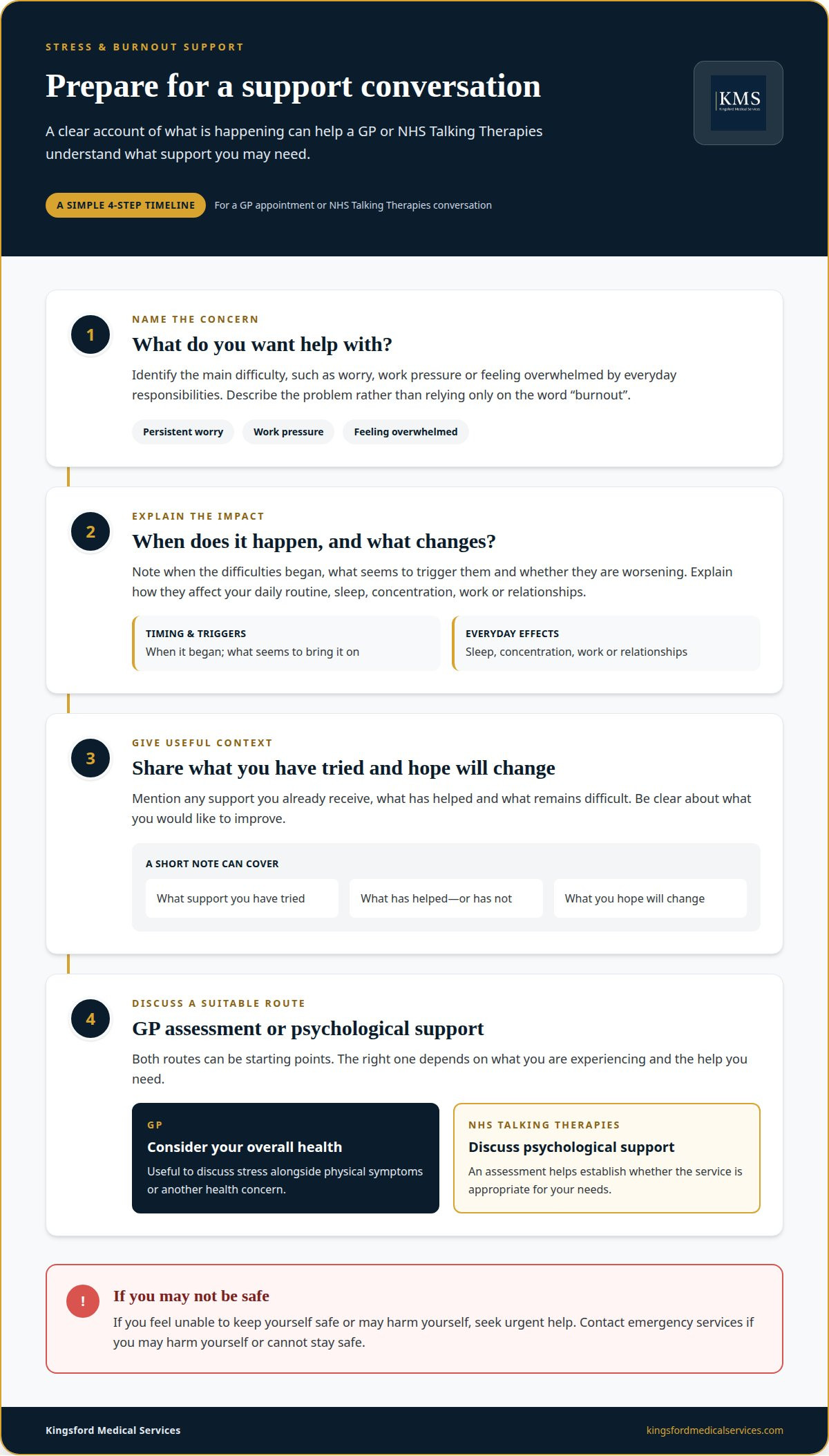
Can I get a stress and burnout consultation through my GP or NHS Talking Therapies?
Yes. You can discuss stress or burnout with your GP and ask about NHS Talking Therapies. These are different routes: a GP can consider your overall health, while NHS Talking Therapies focuses on psychological support. The most suitable starting point depends on what you are experiencing and the help you need.
For a GP appointment, describe how stress affects daily life rather than relying only on the word “burnout”. For example, explain whether worry is disrupting sleep, concentration, work or relationships. Mention when the difficulties began, what seems to trigger them and whether they are worsening. This gives the GP a clearer picture to consider alongside your physical and emotional health.
NHS Talking Therapies provides a route to discuss psychological support. You can ask about accessing the service in your area and explain what you want help with, such as persistent anxiety, feeling overwhelmed by work or struggling with everyday responsibilities. An assessment helps establish whether the service is appropriate for your needs.
A GP discussion may also help when stress occurs alongside physical symptoms or another health concern. For example, describe recurring sleep problems as well as anxiety, rather than treating them as unrelated issues. The GP can consider the full picture and discuss suitable next steps. If you already receive support, explain what has helped and what remains difficult.
To prepare for either conversation, make a brief note of:
The main problem you want help with, such as worry or work pressure.
How it affects your routine, sleep or relationships.
What support you’ve tried and what you hope will change.
If you are unsure which route fits, start by describing your symptoms to your GP or NHS Talking Therapies. Focus on their impact and urgency, as these details help guide the discussion. If you feel unable to keep yourself safe, seek urgent help rather than waiting for a routine appointment.
What happens during a stress and burnout consultation?
A consultation usually begins with your main concern and what prompted you to seek support. You might describe pressure building at work, anxiety before particular tasks or feeling unable to recover during time off. The practitioner may ask when the difficulties began, how often they occur and what changes you have noticed in daily life.
You may be asked how the difficulties affect your routine. Examples include disrupted sleep, difficulty concentrating, irritability or withdrawing from activities you usually enjoy. Mention physical symptoms too, such as tension or changes in appetite. This helps build a fuller picture instead of treating work stress as the only possible influence.
The discussion may cover relevant circumstances, including workload, relationships, caring responsibilities and previous coping strategies. Explain what you have already tried, such as adjusting your routine or speaking with someone you trust. If a particular situation triggers distress, describe what happens before, during and afterwards. These details help identify patterns and priorities.
You can also ask about the practitioner’s approach and what sessions may involve. For instance, ask how conversations might address persistent worry or help you develop practical ways to manage pressure. Agreeing on a clear focus makes the next steps easier to understand. The plan should reflect your concerns, preferences and the support being discussed.
If sleep problems are a prominent concern, explain their pattern and how they affect your daytime functioning. A Respiratory & Sleep Medicine Consultation can address sleep and respiratory concerns through a separate medical assessment. It isn’t a substitute for counselling or psychotherapy, but may be relevant when sleep symptoms need clinical attention.
Before the appointment, note your main concerns, examples of their impact and what you hope to change. You do not need a perfect account. A few clear points, such as “I’m waking unrefreshed” or “I dread Monday mornings”, can help you begin. The practitioner can then ask focused questions and discuss appropriate next steps with you.
Kingsford Medical Services
Kingsford Medical Services offers psychiatry services for people seeking medical support with mental health concerns. If stress or anxiety is affecting your wellbeing, a psychiatric consultation can assess your symptoms and consider appropriate next steps. Psychiatry offers a medical perspective distinct from counselling and may be relevant when symptoms are persistent, complex or affecting daily functioning.
Physical concerns may also need assessment alongside emotional difficulties. For example, ongoing sleep problems can make daily pressures harder to manage. Kingsford Medical Services offers Respiratory & Sleep Medicine Consultations to assess sleep-related concerns. These services address medical needs and are not a substitute for counselling or psychotherapy.
To discuss whether a medical consultation suits your needs, contact Kingsford Medical Services in Knowle, Solihull.
Choose a next step that feels manageable
The first step does not need to solve everything. Decide what you want help with now: understanding persistent distress, discussing its effect on your health or finding an appropriate form of support. A stress and burnout consultation in the West Midlands can help clarify your concerns and identify suitable next steps.
Kingsford Medical Services offers Private GP Appointments for medical concerns, including stress alongside physical symptoms. Respiratory & Sleep Medicine Consultations may help when sleep or breathing concerns need assessment. Paediatric Services support families seeking care for children from birth to seventeen years inclusive. An adult with parental responsibility must accompany the child. The appropriate service depends on the person’s needs and the concern being assessed.
To take the next step, contact Kingsford Medical Services and explain what you’re experiencing and what support you’re seeking. You can start with the concern that feels most pressing; a clear first conversation can help you move towards care with greater confidence.
Frequently Asked Questions
Where can I get a stress and burnout consultation in the West Midlands?
You can seek support through a counsellor or psychotherapist, NHS Talking Therapies, or a GP, depending on whether you want talking therapy or medical assessment. Kingsford Medical Services is based in Knowle, Solihull, and offers private GP appointments and psychiatry services. For example, a GP can consider whether physical symptoms alongside stress need medical review.
What types of professionals provide stress and burnout consultations in the West Midlands?
Counsellors and psychotherapists provide talking therapy, while GPs can discuss stress alongside broader health concerns. Psychiatry offers a medical route for mental health concerns. The right professional depends on the support you are seeking: you might approach a counsellor to explore emotional pressures, or a GP if you also have health symptoms you want assessed.
Are online stress and burnout consultations available in the West Midlands?
Some practitioners offer counselling or psychotherapy online, so you can access support remotely. Kingsford Medical Services also offers online GP appointments, which are medical consultations rather than online talking therapy. Consider whether a private, quiet space at home would let you speak openly, then choose a format that feels practical for your circumstances.


Comments