
Back Pain Second Opinion in the West Midlands: What to Expect
Could another clinical perspective help make sense of persistent back pain and clarify what to do next? If pain or restricted movement continues despite previous advice or treatment, searching for “back pain second opinion West Midlands” may lead you to consider a review. It doesn’t mean you’re rejecting your current clinician or that the original assessment was wrong.
A review can help you understand earlier advice, discuss whether further follow-up may be appropriate and consider a realistic next step. It can’t guarantee a diagnosis, investigation or particular treatment, but it gives you an opportunity to explain your concerns and ask focused questions.
This article explains when another view may be useful, what a clinical review can involve and which records to bring. You’ll also find ways to prepare questions and think about follow-up, including physiotherapy when clinically appropriate. Kingsford Medical Services is based in Knowle, Solihull, and offers in-person and e-consultation options for patients across the West Midlands, including Birmingham and Nuneaton.
Table of Contents
Back pain second opinion in the West Midlands: when another view may help
Persistent back pain can be frustrating, particularly if an assessment or treatment hasn’t explained what to expect next. You may want to understand the reasoning behind earlier advice, discuss symptoms that have changed or explore which options could be appropriate. Seeking a back pain second opinion West Midlands review is a reasonable way to seek clarity, not a criticism of the clinician who first assessed you.
A second opinion is a clinical review of your symptoms, medical history and available information. It may support, refine or differ from earlier advice, but it can’t promise a different answer or a new diagnosis. Back pain has a range of possible causes and patterns. The Back pain overview provides general background, while an individual assessment considers your circumstances.
When might another clinical perspective be useful?
A review may be helpful if symptoms continue, the explanation remains unclear or you’re uncertain about the proposed next step. You might want to discuss how pain affects work, sleep or everyday movement, or whether the plan still makes sense as your symptoms change. Persistent pain doesn’t automatically mean there’s a serious condition or that imaging is needed. The purpose of a review is to assess the information and clarify reasonable options.
Arranging a back pain second opinion West Midlands consultation gives you another opportunity to discuss your concerns and understand the clinical reasoning. It differs from a routine follow-up, which usually checks progress with the clinician or team already involved. A second opinion is not itself a treatment plan: recommendations depend on the assessment. If your main concern is how an agreed plan is progressing, a planned follow-up may be the more direct route.
When back pain needs urgent attention
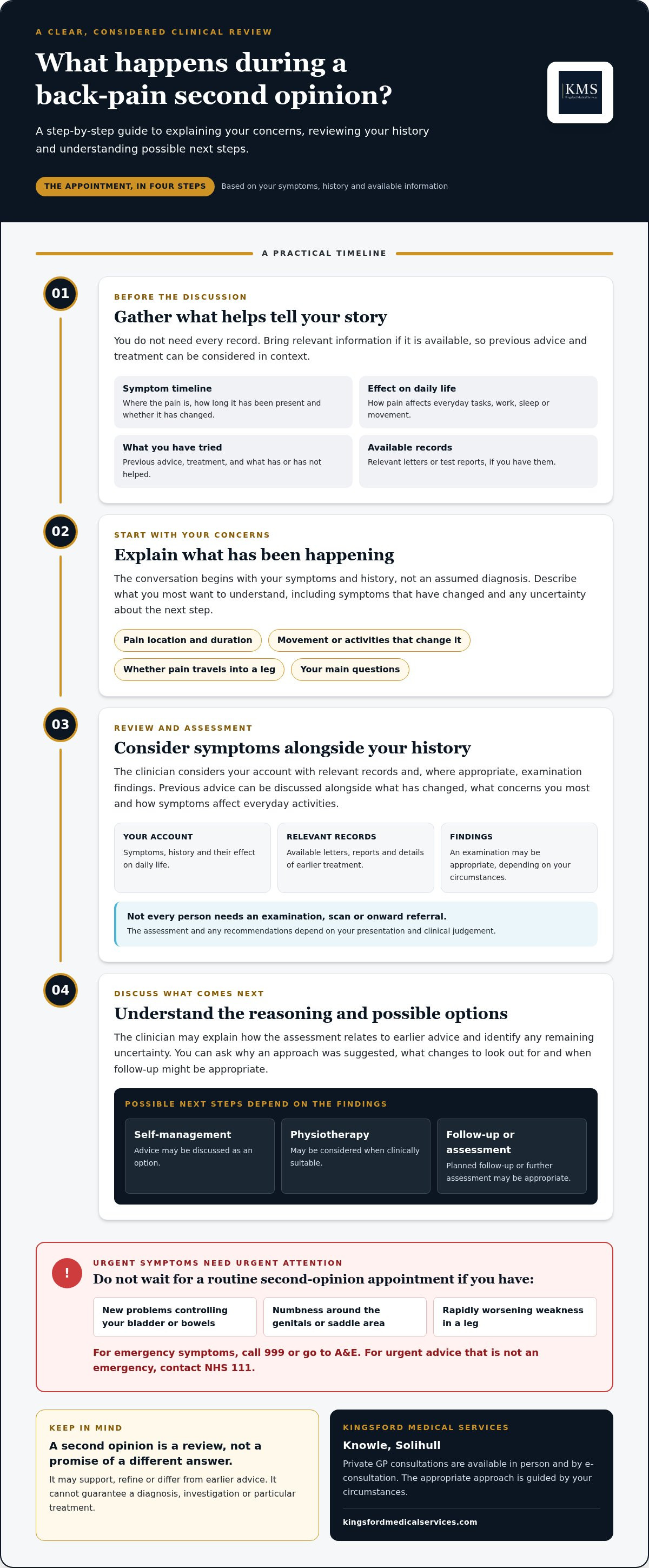
Some symptoms need urgent assessment rather than a routine review. New problems controlling your bladder or bowels, numbness around the genitals or saddle area, or rapidly worsening weakness in a leg require urgent attention. Call 999 or go to A&E for emergency symptoms. If you need urgent advice but it isn’t an emergency, contact NHS 111.
This article and a routine private appointment can’t assess an emergency. Don’t wait for a second-opinion appointment or delay urgent care while gathering previous letters or test results. For non-urgent concerns, a clinical review can help put your earlier assessment into context and identify a considered next step.
What happens during a back-pain second opinion appointment?
A second opinion appointment gives you time to explain what has been happening and what you hope to clarify. The review starts with your symptoms and history, not an assumed diagnosis. The clinician considers your account alongside relevant records and, where appropriate, examination findings.
The conversation may follow a straightforward sequence: discuss your concerns, review your health and back-pain history, assess relevant symptoms, then talk through possible next steps. The assessment depends on your circumstances. A physical examination may be appropriate, but not everyone needs one, a scan or an onward referral. The NICE guidelines for back pain provide national guidance on assessment and management. Decisions about your care are based on clinical judgement and your presentation.
How the clinician reviews symptoms and previous advice
Be ready to describe where the pain is, how long you’ve had it and whether movement or particular activities change it. The clinician may ask whether pain travels into a leg, how it affects everyday tasks and what advice or treatment you’ve already tried. Previous letters, test reports and treatment details can put the discussion in context, but you don’t need to have every record.
Explain what has helped, what hasn’t and what concerns you most. This gives the clinician a fuller picture, rather than focusing on one symptom in isolation.
How the appointment can clarify your options
After considering your history and relevant findings, the clinician may explain how the current assessment relates to earlier advice and identify any remaining uncertainty. You can ask why a particular approach was suggested, what changes to look out for and when follow-up might be appropriate. Shared decision-making means considering your priorities and concerns alongside the clinical assessment.
Possible next steps vary. Depending on the findings, these might include self-management advice, physiotherapy when clinically suitable, planned follow-up or further assessment. No particular recommendation or outcome can be guaranteed in advance; the right approach is individual. A back pain second opinion in the West Midlands can help you understand the reasoning and discuss practical options, even if the second clinician reaches a similar view to the first.
If you’d like to discuss symptoms and previous advice with a clinician, you can arrange a private GP consultation with Kingsford Medical Services. Consultations are available in person and by e-consultation, with the appropriate approach guided by your circumstances.
Second opinion or ongoing treatment: what is the right next step for back pain?
The best next step depends on what you need answered. A second opinion reviews your symptoms and earlier advice; a planned follow-up checks how an existing plan is working. Physiotherapy may support movement and function when clinically appropriate. If symptoms are urgent, seek urgent assessment rather than waiting for a routine appointment or starting general physiotherapy.
What a second opinion can clarify, and what it cannot promise
Another clinician may explain the reasoning behind an earlier assessment, consider whether it fits your current symptoms or discuss reasonable alternatives. The review may reach the same conclusion, which can still help you understand the plan. If views differ, ask what evidence and examination findings inform each recommendation, and how the options relate to your priorities.
A second opinion doesn’t guarantee a new diagnosis, scan, referral, pain relief or particular treatment. It’s a discussion and assessment, not a promise that the first clinician was wrong. If you’re considering a second view through the NHS, the Patients Association explains the process for getting a second opinion. A private consultation is patient-funded and is not an NHS-funded consultation.
When physiotherapy or follow-up may be part of the plan
Ongoing follow-up can focus on whether symptoms, movement and day-to-day function are changing, rather than reopening every decision at each visit. Physiotherapy may be considered if the clinical assessment suggests it is suitable; it isn’t right for every cause of back pain. A private GP consultation also gives you a setting to discuss broader health concerns and appropriate next steps. Kingsford Medical Services is based in Knowle, Solihull, and offers consultations for patients across the wider West Midlands, including Birmingham and Nuneaton. A back pain second opinion in the West Midlands is one option when you need a fresh review of previous advice.
How to prepare for a back-pain second opinion in the West Midlands
A little preparation can help you use the appointment well. You don’t need a complete medical file or a perfect account of every symptom. A brief timeline, relevant records and the questions you most want answered give the clinician a useful starting point.
Records and symptom details to bring
Before your back pain second opinion in the West Midlands, note when the pain began and how it has changed. Write down what seems to affect it, such as particular movements or activities, and whether it disrupts sleep, work or everyday tasks. Include any symptoms travelling into a leg, if relevant.
Previous advice: Summarise assessments, recommendations and follow-up you’ve already had.
Medicines and treatments: List what you’ve tried, what helped, what didn’t and any effects or concerns.
Relevant records: Bring clinical letters, imaging reports or investigation results if they’re readily available.
There’s no need to delay urgent care while looking for paperwork. If a record isn’t to hand, explain what you remember and where it may be held. Be clear about what matters most to you, whether that’s understanding a change in symptoms, returning to a particular activity or reviewing the plan already in place.
Questions to ask during the review
Writing down questions beforehand can make it easier to cover your concerns, especially if there’s a lot to discuss. You could ask:
What does the assessment suggest, and what uncertainties remain?
Which options may be appropriate, and what is each intended to achieve?
How would any proposed next step fit with my existing care and priorities?
What changes should prompt me to seek further help, and when should I follow up?
You can also share what a good outcome would mean to you. For example, you may want to manage daily movement more comfortably or understand whether to continue with an existing approach. Clear priorities help focus the discussion, although recommendations depend on the clinician’s assessment.
Kingsford Medical Services is based in Knowle, Solihull, and serves patients across the wider West Midlands, including Birmingham and Nuneaton. A private consultation offers an opportunity to discuss your symptoms and previous advice, in person or by e-consultation. To take the next step, arrange a private GP consultation.
Arrange a back-pain review with Kingsford Medical Services in Knowle
If you’re considering a back pain second opinion in the West Midlands, Kingsford Medical Services offers a local setting to discuss your symptoms, previous advice and questions with a clinician. The clinic is based in Knowle, Solihull, and serves the wider West Midlands, including Birmingham and Nuneaton. A private GP consultation gives you an opportunity to review your concerns and consider appropriate next steps in light of your circumstances.
A local consultation focused on your concerns
Kingsford’s clinicians are GMC-registered, and consultations are available in person or by e-consultation. The clinic operates seven days a week. Explain what has changed, what you’ve already tried and what you’re hoping to clarify. Relevant letters or reports can provide context, but the discussion can start with your account of the symptoms and earlier advice.
The clinician’s recommendations depend on your history and assessment. Physiotherapy is also available and may form part of care when clinically suitable, but it isn’t appropriate for every cause of back pain. A review is an opportunity to discuss your situation and options, not a promise of a particular diagnosis, investigation or outcome.
Choose a clear next step
For non-emergency concerns, consider whether a private consultation could help you make sense of previous advice or decide what to discuss with your existing care team. Prepare a short symptom timeline and note the questions that matter most to you. The aim is a clearer conversation about reasonable next steps, not pressure to change a plan that may already be appropriate.
If you have urgent warning signs, don’t wait for a routine consultation. Seek urgent NHS or emergency support instead; a private appointment is not a substitute for emergency assessment.
Explore the clinic and arrange an appropriate consultation with Kingsford Medical Services.
Take a confident next step with your back pain
A second opinion can help you understand how your symptoms and previous advice fit together, and what options may be reasonable. It may confirm the original recommendation or offer a different perspective, but it can’t guarantee a new diagnosis, scan or treatment. Bringing a symptom timeline, relevant records and your main questions can help make the conversation more focused.
If you’re considering a back pain second opinion West Midlands, Kingsford Medical Services offers private GP consultations at its Knowle, Solihull clinic, with in-person and e-consultation options. Consultations are provided by GMC-registered clinicians. Physiotherapy is also available when clinically appropriate following assessment.
For non-emergency concerns, explore the clinic and choose a consultation option that suits your needs. Explore Kingsford Medical Services and take a clear, considered step towards understanding what to do next.
Frequently Asked Questions
Can I get a second opinion for back pain in the West Midlands?
Yes. You can arrange a private GP consultation to discuss back pain, previous advice and possible next steps. Kingsford Medical Services is based in Knowle, Solihull, and serves patients across the wider West Midlands, including Birmingham and Nuneaton. Consultations are available in person and by e-consultation. The clinician will consider your individual history and symptoms; a review can clarify options but can’t guarantee a different diagnosis or treatment.
When should I ask for a second opinion about back pain?
Consider another view if your symptoms continue, the explanation remains unclear or you’re uncertain about the recommended next step. You may also want help understanding how earlier advice relates to changes in your pain or daily function. Asking for clarification doesn’t mean you’re criticising your first clinician. A second opinion may support the original advice or offer a different perspective, based on the assessment.
What happens at a back-pain second opinion appointment?
The clinician will usually start by asking about your symptoms, health history, previous advice and what you hope to clarify. They may discuss where the pain is, how long it has been present, what affects it and how it influences daily activities. Any examination or further steps depend on your circumstances and clinical findings. You’ll have an opportunity to discuss possible options, which may include follow-up or physiotherapy when suitable.
Will a second opinion mean I need an MRI scan?
No. A second opinion doesn’t automatically mean you’ll need an MRI or other imaging. The clinician considers your symptoms, history and any relevant examination findings to decide what may be appropriate. Many reviews focus on clarifying the existing assessment and discussing care options. If imaging is considered, the clinician can explain why; a scan or referral isn’t guaranteed simply because you’ve requested another view.
What should I bring to a private back-pain consultation?
Bring a brief timeline of your symptoms, including when they began and what changes them, plus notes on how pain affects sleep, work or movement. List medicines and treatments you’ve tried, including their effects. Relevant clinical letters, test results or imaging reports can provide useful context if readily available. Write down your main concerns and questions too. Don’t delay urgent care to find or gather records.
Can physiotherapy help with back pain after a second opinion?
Physiotherapy may be helpful as part of care when the clinical assessment indicates it’s suitable. It can focus on movement and function, with the approach shaped by your symptoms and circumstances. It isn’t appropriate for every cause of back pain and doesn’t replace assessment of urgent symptoms. A clinician can discuss whether physiotherapy may fit alongside other advice or follow-up, and what its aims would be.
When is back pain an emergency?
Seek emergency help for back pain with new problems controlling your bladder or bowels, numbness around the genitals or saddle area, or rapidly worsening leg weakness. Call 999 or go to A&E for emergency symptoms. For urgent advice that isn’t an emergency, contact NHS 111. Don’t wait for a routine private consultation or physiotherapy appointment if these warning signs occur. This FAQ can’t assess an emergency.



Comments