
Private sick notes for work in Knowle
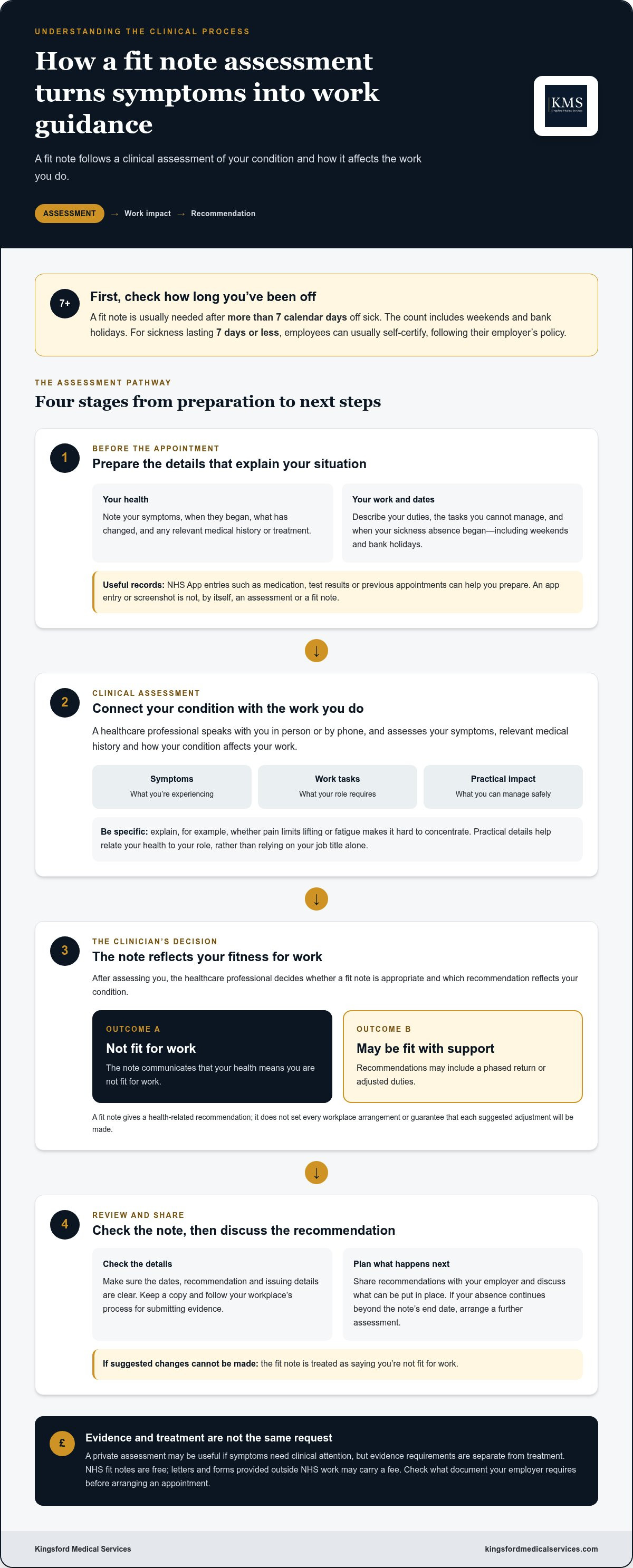
For a private sick note for work in Knowle, the key rule is that a fit note is usually needed when your sickness absence lasts more than 7 calendar days, including weekends and bank holidays, according to the Department for Work and Pensions. For an absence of seven days or less, employees can usually self-certify, but should follow their employer’s policy.
When illness affects work, it’s natural to want clear answers about the evidence your employer needs. This guide explains what a fit note is, how a healthcare professional assesses your ability to work, and whether an employer may accept a private note.
You’ll also learn how to request a fit note and what may affect the cost. NHS fit notes are free, while letters and forms provided outside NHS work may carry a fee. Knowing what your employer requires and what an appointment involves can help you choose the right next step.
Table of Contents
What is a Sick Note (Fit Note)?
A sick note is the everyday name for a fit note, officially called a Statement of Fitness for Work or Med 3. A private sick note is issued after a healthcare professional assesses your illness or injury and its effect on work; it is usually needed after a longer absence.
Fit notes for longer absences
According to the Department for Work and Pensions, a GP sick note is usually needed when an employee has been off work for more than 7 calendar days, including weekends and bank holidays. The count follows calendar days, not shifts, so a weekend can fall within an absence even if you don’t normally work then.
A fit note can say you’re not fit for work or may be fit with support. It can explain an ongoing sickness absence and inform discussions about returning to work. Check the dates it covers and arrange a further assessment if your absence continues beyond the end date.
Private notes for short absences
For sickness lasting seven days or less, employees can usually self-certify rather than provide a fit note. Use your employer’s self-certification process, or tell your manager how your illness affects attendance, following the workplace policy. A private assessment may still be useful if symptoms need clinical attention, but evidence requirements are separate from treatment.
An employer that asks for medical evidence during the first 7 days may have to pay any charge for that evidence. A fit note for a short absence may itself carry a fee. Check what document your employer wants before arranging an appointment, so you can distinguish a clinical consultation from a request for evidence.
Fit notes and workplace adjustments
A fit note can recommend that you may be fit for work with support, such as a phased return or adjusted duties. Someone recovering from an illness or injury, for example, might discuss different tasks or hours with their employer. The note explains the health-related recommendation, but does not set every workplace arrangement.
Share the recommendations with your employer and discuss what can be put in place. If your employer cannot make the suggested changes, the fit note is treated as saying you’re not fit for work. Describe the specific limits affecting your role, such as lifting, concentration or working hours, so you can discuss practical options.
When a private sick note is needed
A private sick note for work in the UK may be useful when you need a clinical assessment or your employer requests medical evidence. A healthcare professional decides whether to issue a fit note after considering your condition and ability to work. Explain your symptoms, when they began and which duties you cannot currently manage.
Fit notes include dates and medical recommendations, so explain any gap between becoming unwell and seeking an assessment. A clinician may consider whether the available history supports an earlier date, but don’t assume a note can be backdated or postdated. If your note is ending and you’re still unwell, describe how your symptoms have changed during reassessment.
Digital delivery does not change the note’s content. Before sending it, check that your employer can read the dates, recommendation and issuing details. Keep a copy and follow your workplace’s process for submitting evidence. If your employer needs to verify the document, follow its usual procedure.
Clinical assessment before issuing a fit note
A fit note should follow a clinical assessment, not just a request for paperwork. Obtaining one without an assessment risks evidence that does not accurately describe your illness, work limitations or appropriate support. An employer may question whether the note reflects a genuine clinical opinion, and you may miss useful guidance about absence or returning to work.
During an appointment, a healthcare professional speaks with you in person or by phone. They assess your symptoms, relevant medical history and how your condition affects your work. Describe your tasks, when the illness began and what has changed. For example, explain whether pain limits lifting or fatigue makes it hard to concentrate. Practical details help a doctor relate your health to your role, rather than relying on your job title alone.
NHS App records can help you prepare for the discussion. Before your appointment, review relevant entries, such as medication, test results or previous appointments, and note anything important. You can explain these details or show records on your device. The clinician still needs to assess your current condition. An app entry or screenshot is not, by itself, an assessment or fit note.
The decision concerns your fitness for work. After assessing you, the healthcare professional decides whether you’re not fit for work or may be fit with support from your employer. A note may recommend a phased return or adjusted duties. Explain your responsibilities and any barriers to carrying them out safely. If your symptoms have changed, say how and when, rather than relying only on an earlier letter.
Dates matter too. Give the clinician an accurate account of when your sickness absence began and any relevant appointments or treatment. Record the days you missed, including weekends and bank holidays, so the timeline is clear. If you were already away from work, explain why you couldn’t seek an assessment earlier. The clinician considers the available information when deciding what dates the note can appropriately cover.
A fit note does not diagnose every symptom or guarantee that an employer will make each recommended adjustment. Its purpose is to communicate a professional view of how your health affects work. Before leaving the clinic or ending a phone appointment, make sure you understand the recommendation, dates and next steps. If the note misses a relevant detail you shared, raise it with the assessing professional.
Are Private Sick Notes Accepted by Employers?
A private fit note can provide clinical evidence, but it does not guarantee acceptance for a particular workplace process. Whether to accept a private medical certificate is ultimately the employer’s decision. Before booking, ask which evidence your workplace requires and whether it accepts a fit note from a private consultation. This helps you understand whether the document will meet the purpose, such as recording an absence or supporting a return-to-work discussion.
Employers may ask for confirmation that you’re fit to return after sickness absence, but a healthcare professional is not required to provide it. A fit note may instead say you’re not fit for work or may be fit with support. These are different questions: evidence of illness during an absence does not necessarily confirm that you’re fit to work on a later date. Explain your employer’s request during the consultation so the clinician understands what information is being sought.
Read your workplace policy before submitting medical evidence. It may distinguish between a self-certification form, a fit note and a separate letter about returning to work. If your employer requests a specific document, clarify whether a fit note is suitable. Keep a copy and record when you submitted it. If your employer has questions about the dates or recommendations, respond through the usual workplace process.
Fees can depend on when the evidence is requested and whether it is NHS work. NHS fit notes are free. If an employer asks for evidence of sickness during the first 7 days, a healthcare professional may charge a fee, and the employer should pay it. Tell the practice that the employer requested the evidence, and ask how the charge will be handled before the appointment. This is distinct from arranging a private consultation for your own clinical assessment.
For an absence lasting longer than 7 calendar days, a GP sick note is usually needed, including when weekends and bank holidays fall within the period. If the evidence is requested during the first 7 days, identify who requested it and what it needs to establish. For example, an employer may want confirmation of sickness absence, while a later discussion may focus on possible duties or adjustments. That distinction helps the healthcare professional assess the relevant information.
A private note is most useful when it accurately reflects an assessed condition and addresses your employer’s stated purpose. It cannot guarantee acceptance or replace workplace policy. Keep communication factual: provide the absence dates, submit the requested document and ask how your employer will handle recommendations about duties or a phased return. This gives both sides a clear basis for discussing what happens next.
How to request a Fit Note
Start by identifying who is treating you and what evidence your employer needs. For an ongoing illness managed by your GP, request an assessment through your GP practice. If you’re receiving hospital treatment, ask the hospital doctor for a fit note. A healthcare professional must assess how your condition affects work before issuing one. A request alone does not confirm that you’re unfit.
You can seek a private sick note for work in Knowle through an online appointment if a clinician assesses you remotely and considers a note appropriate. Fit note assessments can take place in person or by phone. A remote appointment still requires a clear clinical discussion about your symptoms, relevant history and job duties. The clinician decides whether the information supports issuing a note.
Before booking, note when your symptoms began, how they affect daily tasks and what your role involves. For example, explain whether a back problem limits lifting or medication affects concentration. Include the dates you’ve been absent, counting weekends and bank holidays. These details help the healthcare professional understand the timeline and assess your fitness for work, rather than relying on a brief description such as “unwell”.
Prepare any NHS medical records that help explain your current condition. You can request records from the NHS practice or service that holds them, then share relevant information with the assessing clinician. The NHS App may also show health information to discuss during an appointment. Records can support the conversation, but they do not replace a current assessment or automatically certify an absence.
If your employer has requested a letter or specific evidence, bring the request to your appointment. Explain whether it concerns your sickness absence dates, a possible return or recommended workplace adjustments. A fit note records a professional view of your fitness for work; it may not answer every employer query in the way a separate letter would. Clear instructions help the clinician focus on the relevant information.
For a short absence, follow your employer’s self-certification process. If evidence is requested during the first 7 days, explain who requested it and ask about any charge before the assessment. For a longer absence, arrange an assessment with the relevant GP or hospital doctor and keep a copy of the issued statement. If symptoms continue after the note ends, describe what has changed when seeking further clinical advice.
When you feel able to return, you do not need another healthcare appointment simply to resume work. Tell your employer and follow any separate requirements for your role. If you’re arranging a private sick note for work in Knowle, discuss its recommendations with your employer before agreeing on your duties. The note can support a return with adjustments, but it does not arrange them.
Consultation and sick note fees
The cost depends on whether you need an NHS fit note, a private clinical consultation or separate paperwork. NHS fit notes are free. The Department for Work and Pensions says employees do not have to pay for a fit note when they’ve been off sick for more than seven days. This does not mean every appointment or letter connected with sickness absence is free.
Distinguish the clinical assessment from the document. At a private appointment, a healthcare professional assesses your condition and fitness for work. A letter or form provided outside NHS work may carry a fee, even if it concerns the same illness. Ask what the charge covers: the consultation, a fit note or additional evidence requested by your employer. These are distinct services, and knowing which one you need can prevent confusion.
Employers may ask for medical evidence of sickness absence. If the employer asks for that evidence during the first 7 days, a healthcare professional may charge a fee, and the employer should pay it. Tell the practice that your employer requested the document. Clarify who will pay before the appointment, and keep any written request as supporting evidence.
Private consultation fees depend on the case. Factors may include the appointment type, the clinical assessment required and whether you also need a letter or form. A straightforward assessment and a request involving additional medical information may require different work. Ask for a breakdown before proceeding so you can distinguish the consultation cost from any separate document charge.
A hospital doctor should provide a fit note for sickness absence related to hospital treatment. If you need evidence for adjustments or a planned return, explain this when requesting the document. The healthcare professional assesses the medical information and decides what the statement of fitness for work can say. A fit note can recommend workplace changes, while separate correspondence may involve an additional fee.
Before booking, write down what your employer wants, the dates of absence and whether you need a fit note or another letter. Ask whether the request concerns clinical assessment, evidence, or both. If symptoms involve breathing or sleep, a respiratory and sleep medicine consultation can address those health concerns. This helps you understand the purpose of the appointment and the work involved before any fee is agreed.
Kingsford Medical Services: Private GP Appointments
Kingsford Medical Services provides Private GP Appointments for people seeking clinical advice about an illness affecting work. A GP can assess your symptoms and how they affect your duties, then consider whether a fit note is clinically appropriate. An appointment is an assessment, not an automatic certificate, so explain your absence dates, job responsibilities and any employer request clearly.
If respiratory symptoms or sleep problems affect your ability to work, Respiratory & Sleep Medicine Consultations can help address those concerns. Paediatric Services offer a route to care for a child’s health needs. The focus is the person’s health and an individual clinical assessment, with clear information about the next steps.
Take the next step with confidence
If you’re looking for a private sick note for work in Knowle, focus on the clinical question behind the paperwork. A clear account of your symptoms, work duties and employer’s requirements helps make an assessment more useful. It also gives you a practical starting point for discussing support to manage work or plan a return.
Kingsford Medical Services provides Private GP Appointments, Respiratory & Sleep Medicine Consultations and Paediatric Services. These services offer routes to clinical advice for adults with health concerns affecting work and families seeking care for a child. The right appointment depends on who needs care and which health concern they want assessed.
Before getting in touch, prepare the relevant details, including any employer request and the dates you’ve been unwell. You can then explain what you need help with and discuss an appropriate next step with the practice.
Contact Kingsford Medical Services to discuss an appointment. Taking that step can help you approach your health and work situation with greater clarity.
Frequently Asked Questions
Can a certificate cover a period of illness that has already passed?
A clinician can consider an earlier period when assessing your illness and absence, but the dates must be supported by the available information. Explain when your symptoms began, when you missed work and why you did not seek an assessment sooner. Relevant NHS records or treatment details may help establish the timeline. Don’t assume a certificate can be backdated: the clinician must decide what the assessment supports.
Can a private GP issue a fit note?
Yes. A private GP can issue a fit note after assessing your health and how your condition affects your ability to work. Bring practical details, such as your duties and the tasks your symptoms make difficult. The GP’s decision concerns your clinical fitness for work, while your employer’s policy determines how the evidence is handled. A consultation does not guarantee that you’ll receive a note.
Do I need a certificate for a short absence?
Usually, no. For sickness absence of seven days or less, employees can usually self-certify, using their employer’s form or process. Tell your workplace the dates you were unwell and complete its required paperwork. If your employer specifically requests medical evidence during the first 7 days, a healthcare professional may charge for it, and the employer should pay that charge.
Do I need to attend the clinic in person?
Not always. A healthcare professional may assess you in person or by phone, depending on the clinical discussion needed. A remote appointment still requires a clear account of your symptoms, relevant history and work duties. For example, explain how breathlessness affects a physically demanding role. The clinician uses this information to assess your fitness for work and whether a fit note is appropriate.
How quickly will I receive my certificate?
There is no single timeframe for every certificate. Timing depends on when the clinical assessment takes place, whether the professional can make a decision from the information provided and how the document is delivered. Have your absence dates, relevant records and employer’s request ready for the appointment. Ask during booking how the practice will provide any document after the assessment.
MED3 Fit Notes and Private Medical Certificates: What's the Difference?
Med 3 is the official name for a fit note, also called a Statement of Fitness for Work. “Private medical certificate” is a broader description of evidence from a private healthcare professional; it doesn’t necessarily mean the document is a Med 3 fit note. Tell the clinician what your employer needs, then clarify whether the document issued addresses that specific request.
Can a private doctor issue a fit note for work in England?
Yes. A private doctor can issue a fit note after assessing your condition and its effect on your ability to work. Explain your responsibilities and the difficulties your symptoms cause, such as pain affecting manual tasks. The doctor may record whether you’re not fit for work or could work with support. Your employer decides how private medical evidence fits its workplace process.
How many days can you be off sick before you need a fit note in the UK?
A fit note is usually needed when you’ve been off work for more than 7 calendar days, including weekends and bank holidays, according to the Department for Work and Pensions. For seven days or less, employees can usually self-certify, but should follow their employer’s policy. Count calendar days away from work, not just scheduled shifts, when working out the absence period.


Comments