
B12 deficiency treatment in Solihull: injections, tests and fees
A B12 injection is hydroxocobalamin given into a muscle to replace vitamin B12 when injections are appropriate. In Solihull, the injection service uses an ampoule with a concentration of 1000 mcg/ml. B12 deficiency treatment in Solihull starts with understanding the diagnosis and cause, rather than assuming an injection is the right first step.
If you’re weighing up B12 deficiency treatment in Solihull, it’s reasonable to want clear answers about testing, treatment and possible charges. A blood test is the first step when deficiency is suspected, while GP advice helps establish the diagnosis and treatment plan.
This guide explains what an injection involves, why deficiency can develop and when tablets or injections may be used. It also outlines how testing and GP advice fit into care, what can affect private service charges, and how NHS treatment may be an option. You’ll have a clearer picture of the choices and how to approach your next step.
Table of Contents
How Does the B12 Injection Service Work in Solihull?
A private B12 injection service in Shirley, Solihull, provides injections for eligible people already receiving maintenance treatment. The process includes a medical questionnaire, prescriber review and approval before an appointment is confirmed.
Hydroxocobalamin Injection Administration
The vitamin B12 injection uses hydroxocobalamin, supplied as an ampoule with a concentration of 1000 mcg/ml. It is administered into the upper arm as an intramuscular injection. The medicine is prescription-only, and the service operates under a Patient Group Direction.
Schedules depend on the treatment stage and clinical circumstances. Injections for vitamin B12 deficiency anaemia are normally administered every other day initially. Maintenance may involve injections every two or three months for life. Treatment schedules for diet-related deficiency can differ from those used for other causes.
Injection Aftercare and Possible Side Effects
After a B12 injection, the most relevant immediate effect to watch for is soreness at the injection site. Mild injection-site effects usually resolve within a few days. Less common possible effects include headache, itching or nausea.
Keep track of symptoms between appointments. If they return before your next scheduled injection, contact the GP or specialist overseeing your care. They can review whether the dosing interval needs adjustment. An injection service does not change the schedule set by the clinician responsible for your diagnosis.
Eligibility for Maintenance Injections
The maintenance injection service is for adults aged 16 or over who already have a B12 deficiency diagnosis from a GP or specialist. They must also be on an established maintenance schedule. It is not a service for testing suspected deficiency, starting treatment, or using B12 as a general wellness or energy boost.
Bring evidence of your diagnosis and current schedule, such as a GP or hospital letter, repeat prescription slip or medication list from the NHS App. A UK prescriber reviews the medical questionnaire, and approval is required before the appointment is confirmed. This helps distinguish maintenance care from an initial assessment.
Tablets and Preferred Injection Treatment
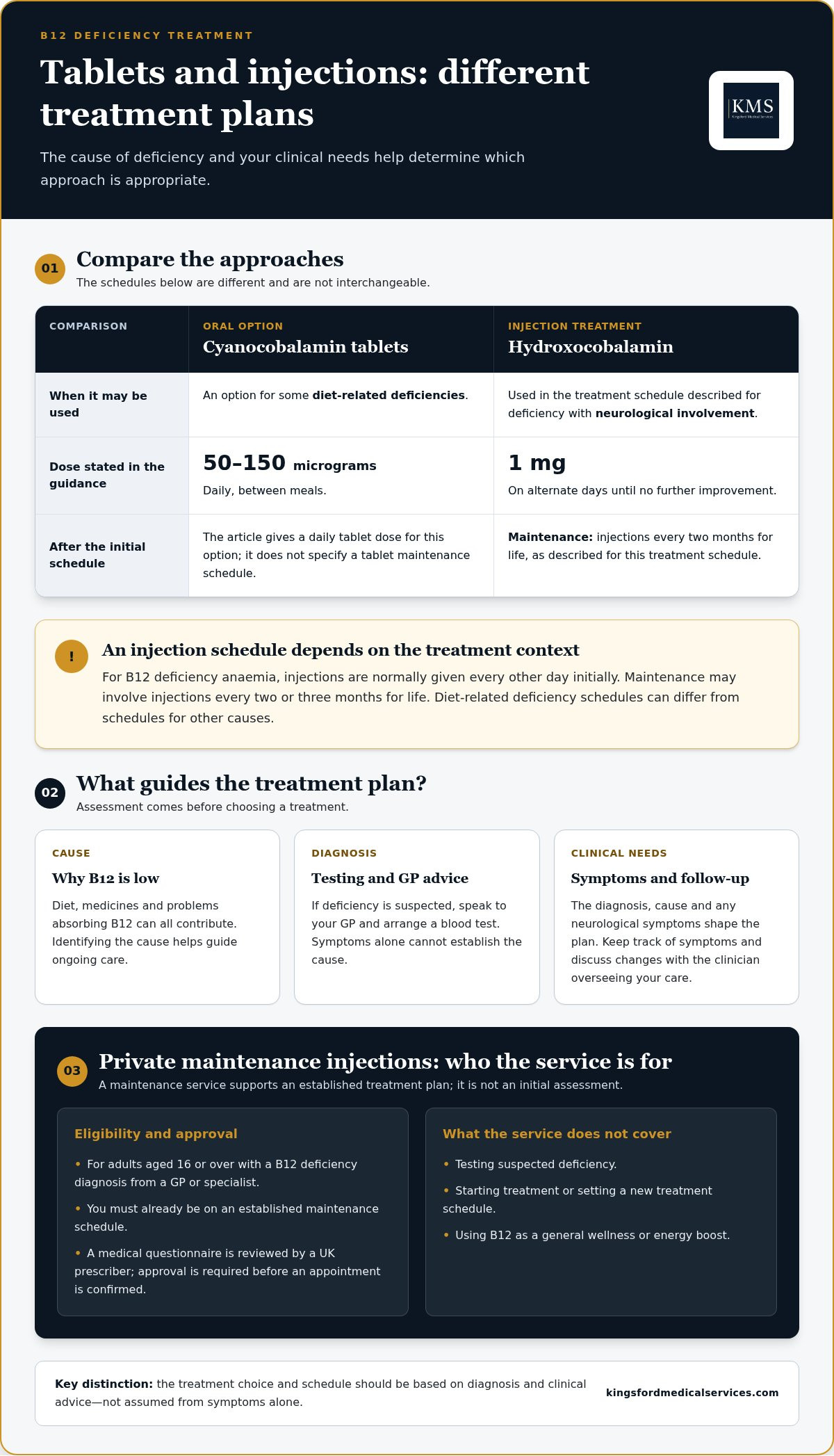
Tablets are an option for some diet-related deficiencies. The guidance lists oral cyanocobalamin at 50-150 micrograms daily between meals. Injections are used in treatment schedules for deficiency with neurological involvement: hydroxocobalamin 1 mg on alternate days until no further improvement, followed by maintenance every two months for life.
These approaches have different doses and schedules, so they are not interchangeable. Your diagnosis, the cause of deficiency and any neurological symptoms shape the treatment plan. A maintenance injection service supports an established schedule; it does not replace the assessment needed to diagnose deficiency or begin treatment.
What are the Main Causes of Vitamin B12 Deficiency?
Vitamin B12 deficiency can develop when the diet provides too little B12, or the body cannot absorb it effectively. Seek urgent medical help for symptoms that are sudden, severe or rapidly worsening, particularly if they affect the nervous system.
Vitamin B12 comes from foods including animal-based products, milk, eggs and dairy. A vegan or strict plant-based diet can increase the risk of deficiency if it doesn’t provide a reliable B12 source. Diet is only one possible cause, so changing what you eat may not address an absorption problem or another underlying factor.
Pernicious anaemia is another cause: it affects the body’s ability to absorb vitamin B12. Some medicines can also contribute to deficiency. A GP assessing the cause will consider diet alongside symptoms and other relevant medical information. This distinction matters because identifying the cause helps guide whether treatment needs to continue and what follow-up is appropriate.
Symptoms can involve more than one body system. Vitamin B12 supports red blood cell formation and normal brain and nerve function. Deficiency may be associated with anaemia and effects on the nervous system. Untreated deficiency could affect the nervous system, so persistent symptoms deserve attention even when diet seems a likely explanation. Symptoms alone cannot establish the cause; assessment and blood testing help clarify the picture.
After treatment starts, keep track of whether symptoms improve, remain unchanged or return. According to the National Institute for Health and Care Excellence, symptoms may start to improve within 2 weeks, but this may take up to 3 months. The pace of improvement can therefore vary. A lack of early change doesn’t by itself explain why symptoms are present, but it is useful information for the clinician reviewing your care.
Follow-up matters if symptoms persist or return between scheduled injections. Contact your GP or specialist so they can review your symptoms and whether the treatment plan needs reassessment. The clinician responsible for your diagnosis and dosing schedule is the right person to discuss changes with. Do not alter an established injection interval yourself.
For a clear review, note when symptoms began, how they have changed, your diet, and any medicines you take. Bring that information to your GP appointment. Mention previous B12 results or treatment as well, if available. These details help focus the discussion on possible causes, the need for further blood tests and suitable follow-up, rather than relying on symptoms alone.
Blood testing and GP advice
If you suspect vitamin B12 deficiency, speak to your GP and arrange a blood test. For B12 deficiency treatment in Solihull, testing helps establish whether deficiency is likely before treatment begins. At your appointment, describe your symptoms, when they started and whether they are changing. Mention your diet, medicines and any previous B12 treatment, as these details help guide assessment.
The National Institute for Health and Care Excellence lists less than 180 nanograms (133 pmol) per litre in its current recommendation. This is also expressed as less than 180 ng/L. Results are considered alongside symptoms and other clinical findings, rather than treated as an isolated number.
A blood count can add useful context. Macrocytic anaemia with an MCV more than 110 fl may prompt B12 testing. Pancytopenia with an MCV more than 120 fl can also prompt investigation. These findings don’t replace B12 testing; they help clinicians assess the wider pattern and decide whether further tests are appropriate.
Bring relevant details to your clinic appointment, including a medicine list, dietary information and previous test results. If you already receive injections, tell the GP when you last had one. That timing can help interpret results and plan follow-up. Do not start or change an intramuscular injection schedule based only on symptoms or one test result.
Diagnosis and the dosing schedule remain the responsibility of your GP or specialist. If testing identifies deficiency, they’ll consider its cause, symptoms and whether further blood tests are needed. For B12 deficiency treatment in Solihull, a maintenance injection service is separate from diagnostic assessment. Someone seeking a first diagnosis needs clinical review, rather than simply booking an injection.
Monitoring continues after treatment starts. Guidance recommends checking a full blood and reticulocyte count within 7 to 10 days after starting vitamin B12 treatment, then after 8 weeks. These checks help assess the blood response. Keep follow-up appointments, and tell your clinician if symptoms persist, worsen or return. That information may influence further assessment or review of the treatment plan.
Before leaving your appointment, make sure you understand what the result means, whether follow-up testing is planned and who is overseeing your treatment. Ask how to report persistent symptoms and how your dosing schedule will be recorded. Clear records help connect test results with treatment decisions, especially when care involves both a GP and a specialist.
What B12 treatment does the NHS recommend for deficiency caused by diet, pernicious anaemia, or medicines?
Treatment depends on the cause of deficiency and whether neurological symptoms are present. Options include intramuscular hydroxocobalamin and oral cyanocobalamin. A confirmed diagnosis helps the clinician choose a suitable starting regimen and decide what follow-up is needed. Diet-related deficiency, pernicious anaemia and medicine-related deficiency should not automatically be treated as identical cases.
For vitamin B12 deficiency without neurological involvement, the initial regimen described is intramuscular hydroxocobalamin 1 mg, three times a week for 2 weeks. This is a loading schedule, rather than a maintenance plan. The injection is given into a muscle, and the dose and frequency should follow the prescribed treatment plan. The presence of neurological involvement changes the initial approach.
Where neurological involvement is present, the described initial regimen is intramuscular hydroxocobalamin 1 mg on alternate days until no further improvement. The listed maintenance schedule is 1 mg every 2 months for life. These timings are specific to that clinical situation; they aren’t a general schedule for everyone with low B12. New or continuing neurological symptoms need clinical review alongside treatment.
For diet-related deficiency, oral cyanocobalamin is another listed option: 50-150 micrograms daily between meals. Twice-yearly intramuscular hydroxocobalamin 1 mg injections are also listed for diet-related deficiency. These options have different routes and schedules. The choice depends on the diagnosis and the person’s treatment plan, rather than preference for tablets or injections alone.
Pernicious anaemia affects B12 absorption, whilst some medicines can contribute to deficiency. Those causes make identifying the underlying reason important when planning treatment and follow-up. Around half of patients with pernicious anaemia are negative for anti-intrinsic factor antibodies, so a negative result does not exclude the condition. The clinician interprets test results alongside symptoms and other findings.
After treatment starts, monitoring helps assess the response. A full blood and reticulocyte count is recommended within 7 to 10 days, then after 8 weeks. Effective replacement should correct macrocytic anaemia within 2 months. According to the National Institute for Health and Care Excellence, symptoms may start improving within 2 weeks, but this may take up to 3 months. Neurological signs and symptoms should improve or resolve within 6 months of effective replacement.
Keep the diagnosis, cause and dosing schedule together in your records. If symptoms persist or return, tell the GP or specialist overseeing your care. They can review your response, results and treatment plan. Do not use a maintenance injection appointment as a substitute for diagnosis or initial treatment: those require clinical assessment and an appropriate prescribed regimen.
Can B12 deficiency be treated with tablets, and when are injections preferred
Yes. Oral cyanocobalamin is an option for some people with diet-related vitamin B12 deficiency. The guidance lists 50-150 micrograms daily between meals. Injections are used in other treatment schedules, including those for neurological involvement. The route depends on the cause of deficiency and the clinical features, not simply on personal preference.
Tablets may suit diet-related deficiency when oral replacement forms part of the treatment plan. The listed dose is taken daily between meals. Regular use matters because this is an ongoing oral schedule, rather than a single dose. Discuss the plan with the clinician overseeing your care, particularly if symptoms persist or your diet remains low in B12 sources.
Absorption helps explain why oral and injected treatment differ. About 1% of an orally administered 1 mg dose of cyanocobalamin is absorbed passively. This figure describes passive absorption, not the amount every person will absorb in practice. An injection delivers hydroxocobalamin intramuscularly, bypassing the digestive route. The underlying cause, symptoms and assessment guide which route is used.
For deficiency with neurological involvement, the described initial injection schedule is hydroxocobalamin 1 mg on alternate days until no further improvement. Maintenance is 1 mg every 2 months for life. Without neurological involvement, the described initial regimen is 1 mg intramuscularly three times a week for 2 weeks. These are distinct treatment schedules, not interchangeable choices.
Diet-related deficiency can have more than one listed approach. Alongside oral cyanocobalamin, the guidance lists twice-yearly intramuscular hydroxocobalamin 1 mg injections. By contrast, established maintenance injections are intended for people already diagnosed and following a prescribed schedule. An injection appointment for maintenance does not assess suspected deficiency or establish a new treatment plan.
Response also takes time. According to the National Institute for Health and Care Excellence, symptoms may start to improve within 2 weeks, but this may take up to 3 months. Track changes and tell your GP or specialist if symptoms continue or return. They can consider the cause, treatment route and follow-up findings together, rather than relying on symptoms alone.
If you need an assessment of suspected deficiency or a treatment discussion, book a vitamin B12 assessment.
Kingsford Medical Services: Respiratory & Sleep Medicine Consultations
Kingsford Medical Services offers Vitamin B12 Testing & Treatment for people who need assessment, testing or a treatment discussion. If you have symptoms, an existing diagnosis or questions about your ongoing plan, this service can help you explore the appropriate next step. Bring details of previous results, medicines and any established injection schedule to support a focused discussion.
Testing and treatment are distinct from a maintenance injection appointment. If you have not been diagnosed, an assessment can help establish whether testing or treatment is appropriate. If you already receive B12 injections, your GP or specialist remains responsible for your diagnosis and dosing schedule; share that plan during your consultation.
For support with B12 testing or treatment, contact Kingsford Medical Services to discuss your needs.
Choose a clear next step for your B12 care
The most useful next step is one that matches where you are now: arranging an initial assessment, discussing results or reviewing ongoing care. For anyone considering B12 deficiency treatment in Solihull, keeping previous test results, symptom notes and medication details together can make the next clinical conversation more focused.
Kingsford Medical Services offers Private GP Appointments, Respiratory & Sleep Medicine Consultations and Paediatric Services. For B12-related questions, its Vitamin B12 Testing & Treatment service is the relevant option to explore. Your needs and current care plan will help shape the discussion; NHS routes remain an option for people who prefer to continue care through their GP surgery.
Taking a considered next step can help you move from uncertainty towards a clearer plan. Contact Kingsford Medical Services to discuss your B12 care and the support you’re looking for.
Frequently Asked Questions
What is a Vitamin B12 Injection?
A vitamin B12 injection delivers hydroxocobalamin into a muscle, commonly the upper arm. In the Solihull maintenance service, the ampoule concentration is 1000 mcg/ml. It’s a prescription-only medicine used within a treatment plan for diagnosed deficiency, rather than a general energy boost. An injection appointment for maintenance is intended for people already diagnosed and following an established schedule.
Are vegans or those on a strict vegetarian diet likely to be deficient in vitamin B12?
Yes, people following vegan or strict plant-based diets are more likely to develop deficiency because B12 is found in animal-based foods, milk, eggs and dairy products. A strict vegetarian diet may include some of these sources, depending on the foods eaten. If your diet excludes or limits them, discuss your intake and any symptoms with your GP. A blood test helps assess suspected deficiency.
Do I need a blood test or proof of deficiency?
If you suspect a deficiency, speak to your GP about a blood test before starting treatment. A private maintenance injection service has a different purpose: it is for people already diagnosed by a GP or specialist and following an established schedule. Proof can include a GP or hospital letter, repeat prescription slip or NHS App medication list. Bring this evidence to your maintenance treatment appointment.
What are the Symptoms of Low Vitamin B12?
Low B12 can affect red blood cell formation and the nervous system, but symptoms alone cannot confirm deficiency. Tell your GP what has changed, when it began and whether it is getting worse. For example, explain if a concern is affecting daily activities or has continued despite treatment. This timeline gives the clinician useful context alongside examination findings and blood test results.
What is the Role of Vitamin B12?
Vitamin B12 is needed for red blood cell and DNA formation, and for normal brain and nerve cell function and development. These roles explain why assessing possible deficiency involves more than considering diet alone. B12 comes from foods including animal products, milk and eggs. If your usual diet excludes these sources, discuss how you obtain B12 with your GP.
What symptoms can low B12 cause?
Vitamin B12 deficiency may affect the blood and nervous system, so report symptoms that persist, change or return during treatment. Keep a short record of when they occur and any relationship to your injection schedule. If symptoms return between maintenance injections, contact your GP or specialist. They can review whether your dosing interval needs assessment rather than you changing it yourself.
What are the symptoms and causes of vitamin B12 deficiency?
Deficiency may affect red blood cell formation and nervous system function. Possible causes include a diet low in B12 sources, pernicious anaemia, or some medicines. These causes call for different considerations, so tell your GP about your eating pattern and medicines. Identifying the likely cause helps inform the treatment plan and whether ongoing replacement or further clinical review is needed.
How is B12 deficiency diagnosed in the UK, and what blood tests are used?
Diagnosis starts with a GP assessment and blood testing. According to the National Institute for Health and Care Excellence, a total or active B12 result below 180 nanograms (133 pmol) per litre indicates confirmed deficiency. A full blood count can provide further context, including red-cell size. Macrocytic anaemia with an MCV more than 110 fl may prompt B12 testing; results are interpreted alongside symptoms.



Comments