
Expert Child Psychiatrist Solihull: Local Specialist Care
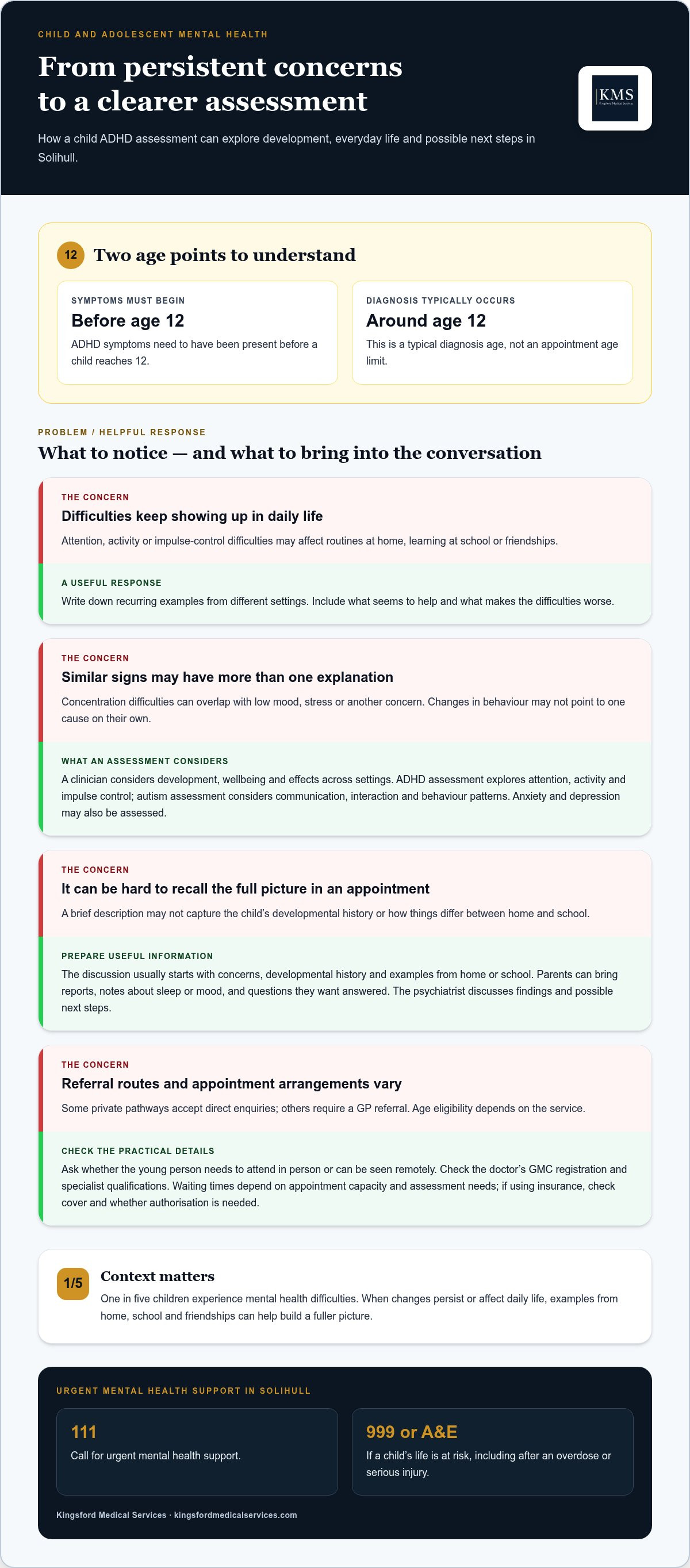
Persistent difficulties with attention, activity or impulse control deserve a closer look, rather than being written off as a passing phase. ADHD symptoms need to be present before a child reaches 12 years of age, and the condition is typically diagnosed at around 12 years old. A private child psychiatrist in Solihull, West Midlands can assess how a young person’s difficulties present and affect everyday life.
It can be worrying when school, friendships or home routines become harder, and parents may wonder whether ADHD or another issue is behind the changes. This article explains how untreated ADHD may affect children and teenagers, what an assessment involves and what child-focused support is available in Solihull. It also outlines the assessment pathway and how to prepare for a conversation about a young person’s needs.
Table of Contents
Private ADHD assessment for children and young people
An assessment can help clarify whether a young person’s difficulties may be related to ADHD or another concern. A private child psychiatrist in Solihull, West Midlands can consider symptoms in the context of development, wellbeing and everyday life.
Child and adolescent psychiatric assessments
An assessment usually begins with a discussion of concerns, developmental history and examples from home or school. Parents can bring reports, notes about sleep or mood, and questions they want answered. The psychiatrist discusses the findings and possible next steps. The appointment format depends on the assessment pathway, so ask whether the young person needs to attend in person or can be seen remotely.
ADHD and autism assessments
ADHD assessment explores attention, activity and impulse-control symptoms, including their effects in different settings. Symptoms need to be present before a child reaches 12 years of age; diagnosis typically occurs around 12 years old. Autism assessment considers communication, interaction and behaviour patterns. The assessment should explain how information from the young person, family and school contributes to conclusions.
Conditions assessed and treated
Child and adolescent psychiatry may assess concerns such as ADHD, autism, anxiety and depression. A clinician considers how symptoms may overlap, including concentration difficulties alongside low mood, before discussing a care plan. Adult mental health assessment is a separate pathway, so make clear whose needs the appointment is for.
Referral and age eligibility
Private referral requirements vary: some pathways accept direct enquiries, while others ask for a GP referral. Age eligibility also depends on the service; the ADHD symptom-onset rule is not an age limit for appointments. When choosing a private child psychiatrist in Solihull, West Midlands, check the doctor’s GMC registration and specialist qualifications. Waiting times depend on appointment capacity and assessment needs. If using insurance, ask whether your policy covers psychiatric assessment, ADHD or autism, and whether authorisation is needed.
Child and young people services
Support should make sense of a young person’s needs across home, school and relationships. One in five children experience mental health difficulties, so changes in behaviour deserve attention when they persist or affect daily life. A useful first step is to note examples, such as withdrawing from friends, struggling to concentrate in class or finding family routines difficult.
A clinical assessment can explore how symptoms of attention deficit hyperactivity disorder, anxiety or low mood develop and affect a child. Parents can share observations from home and school, including what helps and what makes difficulties worse. Examples from different settings give the clinician a fuller picture and can help distinguish a possible disorder from a response to stress or another concern.
A child’s support needs can change as they grow. A plan may consider how symptoms affect learning, friendships and family relationships, then identify appropriate next steps. Depending on the assessed needs, these might include therapy or counselling. Adults concerned about their own mental health need an adult assessment pathway; a child’s support plan may not apply to them.
For urgent mental health support in Solihull, call 111. If a child’s life is at risk, including after an overdose or serious injury, call 999 or go to A&E immediately. For children and young people under 18 living in Birmingham, Birmingham and Solihull Mental Health NHS Foundation Trust advises speaking to a GP for referral to the correct service.
Write down the child’s immediate concerns, any changes in behaviour and the support already tried before seeking help. For non-emergency concerns, explore mental health support as a possible next step.
Kingsford Medical Services: Respiratory & Sleep Medicine Consultations
Kingsford Medical Services offers paediatric and psychiatry services for families seeking support with a young person’s health or mental health concerns. These services may be a suitable next step when difficulties need clinical assessment. Respiratory and sleep medicine consultations are available for respiratory or sleep concerns.
The right service depends on the young person’s concerns and support needs. Contact Kingsford Medical Services to discuss a suitable next step.
Take the next step towards support
Choosing a private child psychiatrist in Solihull, West Midlands can help you seek a clearer understanding of a young person’s needs. Before an appointment, write down the concerns you most want addressed and how they affect everyday life. This can help focus the conversation on what matters to your family.
Kingsford Medical Services offers private GP appointments, paediatric services and respiratory and sleep medicine consultations. These services provide options for discussing health concerns and identifying a suitable clinical next step. Contact the team to discuss your needs.
Contact Kingsford Medical Services to take the next step. A clear conversation can help your family move forward with greater confidence.
Frequently Asked Questions
What does untreated ADHD look like in children and teenagers?
Untreated ADHD can affect organisation, concentration and impulse control, and these difficulties may be mistaken for carelessness or defiance. A child might repeatedly forget equipment or leave tasks unfinished; a teenager might miss coursework deadlines, interrupt conversations or act without considering the consequences. Signs vary, so note recurring examples and where they occur. This record can help you explain your concerns during an assessment.
How can parents check a child psychiatrist’s GMC registration and specialist qualifications?
Before booking, check the doctor’s GMC registration and specialist qualifications.


Comments