
Joint pain specialist in Birmingham for assessment and treatment
Persistent knee pain is a reason to seek a clinical assessment rather than simply put up with discomfort. A joint pain specialist in Birmingham can assess your symptoms, examine how the joint moves and consider whether further investigation or another type of care may help.
It’s understandable to want clear answers when pain affects walking, sleep or everyday activities. An assessment starts with your symptoms and medical history, then considers the joint and whether the pain could relate to a condition such as arthritis. Rheumatology focuses on diseases affecting joints, muscles and connective tissue, including inflammatory forms of arthritis.
This article explains what a joint pain and arthritis assessment may involve, which conditions may be considered and how rheumatology fits into joint-pain care. It also outlines factors that can shape the next steps, so you know what to expect.
Table of Contents
Joint pain and arthritis assessment
A joint pain specialist in Birmingham assesses your symptoms, movement and medical history before discussing possible next steps. The findings can help distinguish arthritis from an injury or another cause.
Assessment of arthritic conditions
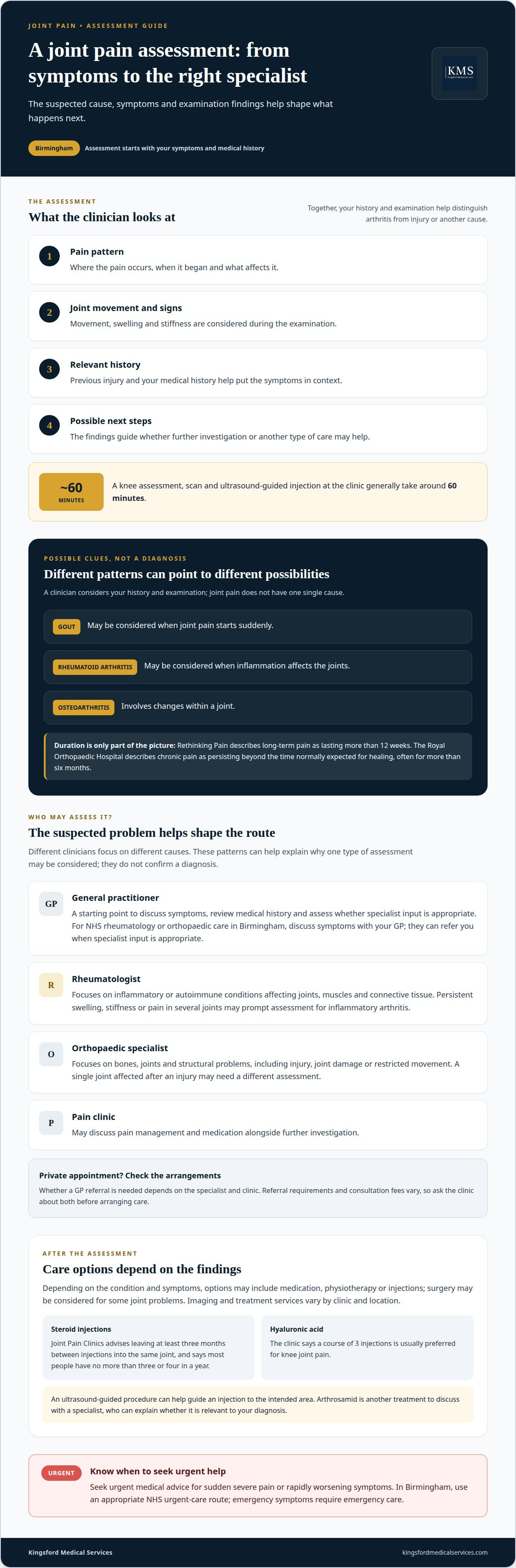
An assessment usually starts with where pain occurs, when it began and what affects it. The clinician examines movement and considers swelling, stiffness, previous injury and relevant medical history. A knee assessment, scan and ultrasound-guided injection at the clinic generally take around 60 minutes. Compare providers by their assessment services, location and available patient reviews, rather than reviews alone.
Whether a private appointment requires a GP referral depends on the specialist and clinic’s booking arrangements, so check the referral requirements when booking. Consultation fees also vary according to the clinician’s speciality, assessment and any investigations. Ask the clinic about costs before arranging care.
Gout, rheumatoid arthritis and osteoarthritis
Gout, rheumatoid arthritis and osteoarthritis are different conditions, so the pattern of symptoms matters. Gout may be considered when joint pain starts suddenly; rheumatoid arthritis may be considered when inflammation affects the joints. Osteoarthritis involves changes within a joint, while arthritis is a broader term. A clinician uses your history and examination to decide which possibilities need investigation, rather than assuming all joint pain has the same cause.
Rethinking Pain describes long-term pain as lasting more than 12 weeks. The Royal Orthopaedic Hospital describes chronic pain as persisting beyond the time normally expected for healing, often for more than six months. These descriptions help explain duration, but an assessment also considers the joint and symptoms.
Diagnosis, imaging and treatment options
Services for joint-pain diagnosis, imaging and treatment vary by clinic and location. When considering an appointment, find out whether it includes a clinical assessment and whether imaging, such as ultrasound, is part of the care pathway. A pain clinic may discuss pain management and medication alongside further investigation.
Treatment may include medication, physiotherapy or injections; surgery may be considered for some joint problems. Arthrosamid is one treatment to discuss with a specialist, who can explain whether it is relevant to your diagnosis. The appropriate option depends on the condition, symptoms and assessment findings.
Seek urgent medical advice for sudden severe pain or rapidly worsening symptoms. In Birmingham, use an appropriate NHS urgent-care route for urgent help; emergency symptoms require emergency care.
Rheumatology and joint pain
Rheumatology addresses conditions affecting joints, muscles and connective tissue. A rheumatologist assesses inflammatory or autoimmune causes, while an orthopaedic specialist focuses on bones, joints and structural problems. The appropriate appointment depends on your symptoms, examination findings and whether inflammation or a mechanical problem is suspected.
For example, persistent joint swelling, stiffness or pain in several joints may prompt an assessment for inflammatory arthritis. A single joint affected after an injury may need a different assessment. The specialist reviews your history, examines movement and considers investigations to identify the cause and guide care, with the aim of supporting function as well as easing symptoms.
To see an NHS rheumatologist or orthopaedic specialist in Birmingham, start by discussing your symptoms with your GP. Your GP can assess the problem and refer you when specialist input is appropriate. For private care, ask about the clinic’s referral process when booking. A private GP appointment can also provide a starting point to discuss symptoms and possible next steps.
Rheumatology care may include medication and pain management, as well as procedures where appropriate. Steroid injections are one possible treatment for joint pain. Joint Pain Clinics advises leaving at least three months between steroid injections into the same joint and says most people have no more than three or four injections in a year. The decision depends on diagnosis, symptoms and previous treatment.
Other options address different causes and needs. A course of 3 injections of hyaluronic acid is usually preferred for knee joint pain, according to the clinic. An ultrasound-guided procedure can help guide an injection to the intended area. Ask the specialist to explain the purpose, expected effects and aftercare of each proposed treatment, including how it may support everyday function.
If you need an initial conversation about symptoms before a specialist pathway, a private GP appointment offers a place to discuss your concerns and appropriate next steps.
Which specialists treat joint pain in Birmingham, UK?
The right clinician depends on the suspected cause and the help you need. A GP can assess your symptoms, review your medical history and decide whether specialist input is appropriate. For example, ongoing swelling may lead to a rheumatology assessment, while pain after a fall may need evaluation for structural damage.
A rheumatologist focuses on inflammatory and autoimmune conditions affecting joints, muscles and connective tissue. They may assess symptoms associated with rheumatoid arthritis or gout, then use an examination and diagnostic tests to guide care. This specialist may be particularly relevant when joint problems involve inflammation or several areas of the body.
An orthopaedic specialist assesses bones, joints, ligaments and tendons. They may be involved when an injury, joint damage or restricted movement needs further investigation. Depending on the findings, care may include non-surgical options or discussion of surgery. Orthopaedic and rheumatology assessments differ because each focuses on different possible causes.
Physiotherapists help address movement, strength and function. For example, a programme may focus on improving knee movement and supporting everyday activities. A pain specialist may assess persistent pain and discuss pain-management approaches. These professionals can have complementary roles, but the appropriate pathway depends on the assessment and the problem being treated.
In Birmingham, consider what you need the appointment to achieve: investigate inflammation, assess an injury, improve movement or manage persistent pain. Look at the specialist’s clinical focus, the investigations and treatments offered through that service, and the appointment location. Patient reviews can provide insight into communication and care, but they don’t replace matching the clinician’s expertise to your symptoms.
Before your appointment, note which joints hurt, when symptoms began and what makes them change. Include any previous injury, current medication and effects on activities such as walking or dressing. These details help a GP or specialist understand your situation and decide which questions or assessments should come next.
Where are NHS rheumatology clinics and joint pain services in Birmingham?
In Birmingham, joint-pain care follows different routes depending on whether you need an NHS or private assessment. Sandwell and West Birmingham NHS Trust receives pain-service referrals from GPs and healthcare professionals. For NHS rheumatology, discuss your symptoms with your GP, who can assess whether a specialist referral is appropriate. The service and appointment location depend on the referral pathway.
A Birmingham joint-pain clinic is located at 38 Harborne Road, Edgbaston, Birmingham, B15 3EB. Keep the full address available when planning an appointment, and follow the directions provided with your booking. This is a clinic address, not a statement that every NHS rheumatology or pain service operates there. NHS services may use separate sites and referral arrangements.
To find the right NHS route, describe the problem clearly at your GP appointment. Explain which joints are affected, how symptoms limit your activities and whether the pain followed an injury. Mention previous investigations or treatment, including medication. These details help your GP decide whether rheumatology, orthopaedics or a pain service best fits your concern. Sandwell and West Birmingham NHS Trust’s pain service accepts referrals from GPs and healthcare professionals.
Before travelling, check the location and appointment instructions on your NHS letter. A rheumatology appointment and a pain-service appointment may involve different clinical teams, even within Birmingham. Take your current medication details and relevant records, such as previous scan results, if available. If an appointment is at the Harborne Road address, use B15 3EB to identify the correct site. Do not assume that a service’s name alone tells you where it is based.
For private care, follow the clinic’s stated address and booking instructions rather than assuming NHS referral routes apply. Match the service to your referral or appointment letter, then plan your journey to the named site. For the NHS pain services described by Sandwell and West Birmingham NHS Trust, your GP or referring healthcare professional provides the referral route.
Kingsford Medical Services: Respiratory & Sleep Medicine Consultations
Kingsford Medical Services provides Respiratory & Sleep Medicine Consultations for concerns involving breathing or sleep. These consultations address a different clinical need from arthritis or joint-pain assessment, so consider them if respiratory symptoms or sleep difficulties also need attention.
For example, someone managing joint symptoms alongside breathing concerns may need a separate assessment for each issue. A respiratory and sleep consultation focuses on the relevant breathing or sleep problem, while joint symptoms need an appropriate assessment of the affected joint and possible causes. Keeping the concerns distinct can help clarify which appointment addresses each part of your health.
If breathing or sleep concerns are affecting you alongside joint symptoms, contact Kingsford Medical Services to discuss its respiratory and sleep consultations.
Choose a clear next step for your joint health
Ongoing joint pain can make everyday decisions difficult. Note which movements are affected, what changes your symptoms and how they influence daily activities. Share these details at your appointment so the clinician understands your priorities and can discuss an assessment suited to your concerns. Choosing a joint pain specialist in Birmingham means finding care relevant to the problem, rather than selecting a treatment in advance.
Kingsford Medical Services’ consultations focus on respiratory and sleep concerns, not joint-pain diagnosis or treatment. If breathing or sleep difficulties also affect you, the service may be relevant to those separate concerns. For joint symptoms, follow the appropriate NHS or specialist pathway described above.
For information about Kingsford Medical Services’ respiratory and sleep consultations, contact Kingsford Medical Services. Taking one clear step at a time can help you approach your health concerns with greater confidence.
Frequently Asked Questions
Do you have a knee pain specialist?
Kingsford Medical Services offers physiotherapy services that may be relevant when knee pain affects movement or daily activities. Physiotherapy can focus on mobility and function; it is distinct from a rheumatology or orthopaedic consultation. If you’re unsure which appointment fits your concern, a private GP appointment can be a starting point to discuss your symptoms and possible next steps.
What should I expect at a joint pain specialist appointment?
Expect to discuss when the pain began, what makes it better or worse, and how it affects activities such as climbing stairs. The clinician may ask about previous injuries, other health conditions and medication, then examine the affected joint and its movement. Bring a medication list and relevant scan reports, and note any questions you want answered.
How do Birmingham joint pain specialists compare by services, location and patient reviews?
Compare each specialist’s clinical focus, assessment and treatment services, available investigations and appointment location. Patient reviews can provide insight into care, but should not replace matching the specialist’s expertise to your symptoms.
Which Birmingham clinics offer joint pain diagnosis, imaging and treatment?
Clinics differ in location and available services, so check whether an appointment includes a clinical assessment and whether imaging such as ultrasound is available. A Birmingham joint-pain clinic is at 38 Harborne Road, Edgbaston, Birmingham, B15 3EB.



Comments