
Private insomnia help and appointments in Solihull
A sleep test isn’t always the first step: help for insomnia at a clinic in Solihull can begin with a consultation about your sleep pattern, health and daily routine. The NHS describes insomnia lasting less than 3 months as short-term, and insomnia lasting 3 months or longer as long-term. The length of time you’ve been affected is one useful part of understanding what support may help.
If you’re struggling to fall asleep, waking during the night or feeling tired during the day, it’s understandable to want a clear plan. A careful discussion before testing can help identify what may be affecting your sleep and whether further assessment is appropriate.
This article explains what to expect before testing, how insomnia support can be tailored to your circumstances, and what to know about referrals for a private appointment in Solihull. You’ll also find out how a consultation can help clarify the next steps.
Table of Contents
Consultation before testing
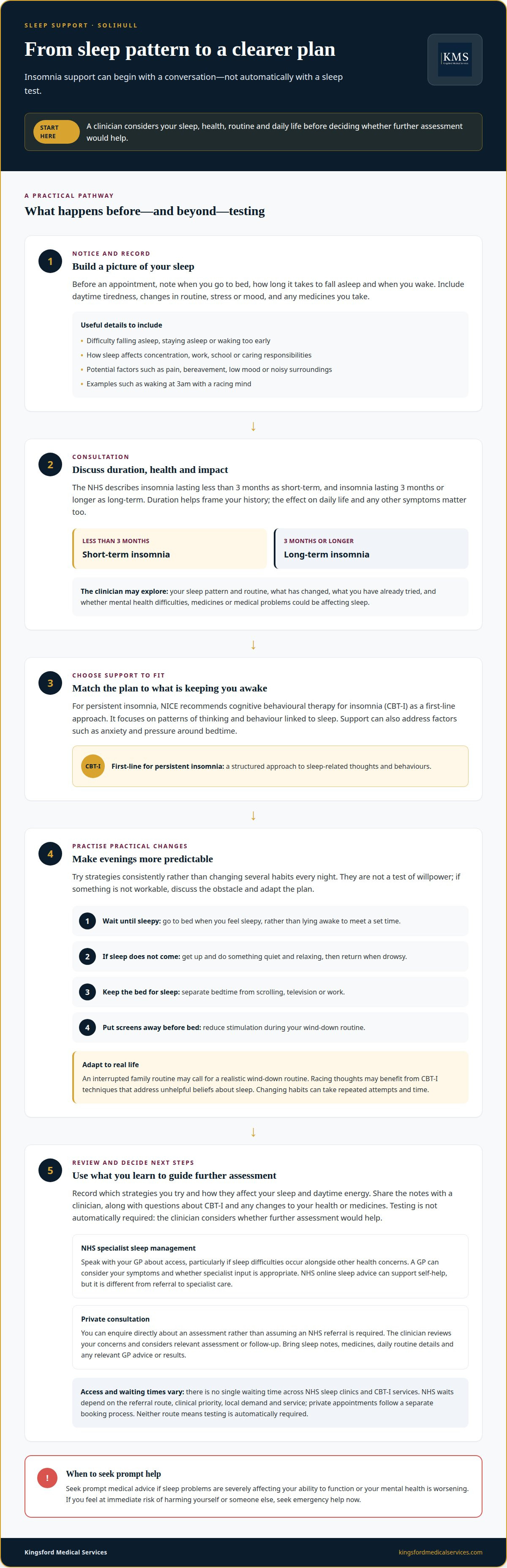
A consultation helps establish what is disrupting sleep before anyone considers testing. In the UK, insomnia lasting less than 3 months is called short-term insomnia, according to the NHS. Insomnia lasting 3 months or longer is called long-term insomnia, according to the NHS. These descriptions help frame the history, but the effect on daily life and any other symptoms matter too.
Before an appointment, note when you go to bed, how long it takes to fall asleep, and when you wake. Include daytime tiredness and examples such as waking at 3am with a racing mind. Record changes in routine, stress or mood, and any medicines you take. This gives the clinician a clearer picture than a single difficult night.
Describe whether the difficulty is falling asleep, staying asleep or waking too early.
Explain how sleep problems affect concentration, work, school or caring responsibilities.
Mention pain, bereavement, low mood or noisy surroundings if they may be relevant.
What are the waiting times for sleep clinics and CBT-I in Solihull? There is no single waiting time across NHS sleep clinics and CBT-I services. NHS waits depend on the referral route, clinical priority, local demand and the service involved. Private appointments follow a separate booking process.
Testing is not automatically the first step for insomnia. A clinician first considers your sleep pattern, health, routine and possible contributing factors, then decides whether further assessment would help. Insomnia can overlap with mental health difficulties, and some medicines or medical problems can affect sleep. Tell the clinician what has changed and what you have already tried.
If persistent sleep difficulties concern you, speak with a GP or another health professional. Bring notes and questions, including whether a sleep assessment or CBT-I may be appropriate. A focused conversation can clarify the next step without treating every restless night as a reason for testing.
Individual insomnia treatment
Insomnia support works best when strategies reflect what is keeping you awake. Anxiety can make it harder to fall asleep or stay asleep, so treatment may address both sleep habits and thoughts that increase pressure around bedtime. For persistent insomnia, NICE recommends cognitive behavioural therapy for insomnia (CBT-I) as a first-line approach. It focuses on patterns of thinking and behaviour linked to sleep.
Practical changes can make evenings more predictable, but they take practice. Try these steps consistently rather than changing several habits every night:
Go to bed when you feel sleepy, rather than lying awake to meet a set time.
If sleep doesn’t come, get up and do something quiet and relaxing, then return when drowsy.
Keep the bed for sleep, helping separate bedtime from scrolling, television or work.
Put screens away before bed to reduce stimulation during your wind-down routine.
These strategies aren’t a test of willpower. If an approach isn’t workable, discuss the obstacle and adapt the plan. For example, a parent whose evening routine is interrupted may need a realistic wind-down routine, while someone with racing thoughts may benefit from CBT-I techniques that address unhelpful beliefs about sleep. Changing habits can take repeated attempts and time.
When should insomnia symptoms be assessed urgently by a doctor? Seek prompt medical advice if sleep problems are severely affecting your ability to function or your mental health is worsening. If you feel at immediate risk of harming yourself or someone else, seek emergency help now.
Make treatment easier to personalise by noting which strategies you try and how they affect your sleep and daytime energy. Bring that record to a clinician, along with questions about CBT-I and any changes to your health or medicines. If physical symptoms or another health concern may be contributing, discuss those too. Assessment can help distinguish a sleep-habit problem from an issue needing different attention.
Private appointments and referral requirements
Referral routes differ between NHS and private care. For NHS specialist sleep management in Solihull, speak with your GP about access, particularly if sleep difficulties occur alongside other health concerns. A GP can consider your symptoms and whether specialist input is appropriate.
Is CBT-I available in Solihull through the NHS or privately? CBT-I is used for persistent insomnia and may be accessed through NHS or private routes. NHS access starts with a GP discussion; private access depends on the service and clinician you book with.
For a private appointment, you can enquire directly about an assessment rather than assuming an NHS referral is required. The clinician will review your sleep concerns and consider what assessment or follow-up is relevant. Bring a record of your sleep patterns, medicines and daily routine, along with any questions. If you have already spoken with a GP, share relevant advice or results.
What online NHS services or self-referral options help with insomnia in Solihull? NHS online sleep advice can support self-help, but it is different from referral to specialist care. To discuss NHS specialist sleep management, contact your GP about the appropriate route. Don’t assume an online form provides direct access.
Before choosing a private consultation, consider what you need from it: help understanding a changing sleep pattern, discussion of possible contributing factors, or guidance about further assessment. Ask about the appointment’s purpose and what information to bring. Clear notes about bedtime, awakenings and daytime effects can make the discussion more focused.
Access differs between a private consultation and NHS specialist care. A private appointment offers a separate route for clinical discussion, while NHS specialist access involves speaking with a GP. Neither route means testing is automatically required. The clinician’s assessment helps determine whether advice, CBT-I or another form of investigation fits your circumstances.
Are there NHS sleep clinics near Solihull, and how do I access them?
Solihull’s NHS sleep-clinic listing names Birmingham Heartlands Hospital as the referral destination. The hospital is in Birmingham, rather than Solihull, and its address is Bordesley Green East, Birmingham, B9 5SS. This local detail can help you recognise the destination on appointment correspondence and plan your journey once attendance arrangements are provided.
The address identifies the hospital, not the specific clinic department or entrance. Use your appointment letter for those details, along with the appointment date and arrival instructions. A hospital address alone may not tell you where within the site your appointment is taking place, so keep the correspondence accessible when preparing to attend.
For practical planning, distinguish the referral destination from the final appointment instructions. If your letter names Birmingham Heartlands Hospital, use the listed address as the hospital destination, then follow the department and arrival information in the letter. Don’t assume that a Solihull listing gives directions to a particular clinic room or entrance.
Read the appointment correspondence for the named department and arrival instructions.
Keep the hospital address and appointment details together when planning travel.
Use the contact details in your letter if attendance instructions need clarification.
A hospital listing gives a destination, while your appointment correspondence provides the details for attending. Keep these separate when arranging travel from Solihull to Bordesley Green. If you receive further instructions after the referral, use the latest correspondence to guide your visit.
People seeking help for insomnia at a clinic in Solihull may also consider a private clinical discussion about sleep assessment. This is a separate route from the NHS destination at Birmingham Heartlands Hospital. For a private option, explore a clinic in Solihull for insomnia support through sleep assessment options.
Kingsford Medical Services: Respiratory & Sleep Medicine Consultations
Kingsford Medical Services offers Respiratory & Sleep Medicine Consultations for people seeking clinical advice about ongoing sleep difficulties or possible respiratory factors. Discuss your symptoms and relevant health concerns with a clinician, who can help clarify suitable next steps. A consultation may be useful when sleep problems persist, affect daytime life or occur alongside breathing concerns.
Before your appointment, note your sleep pattern, symptoms and any questions you want to raise. This helps make the discussion more focused and gives the clinician context for considering appropriate support. If the concerns relate to a child, Paediatric Services may also be relevant; questions about mood affecting sleep may be discussed through Psychiatry Services.
For a private discussion about sleep or respiratory concerns, contact Kingsford Medical Services in Knowle, Solihull.
Choose a clear next step for better sleep
Persistent sleep difficulties can affect more than your nights, so give your next conversation a practical purpose. Consider what you most want help with: understanding a possible cause, discussing how sleep affects your wellbeing, or finding an appropriate assessment route. That focus can help you explain your priorities and make the appointment more useful.
If you’re looking for help for insomnia from a clinic in Solihull, Kingsford Medical Services offers Private GP Appointments and Respiratory & Sleep Medicine Consultations in Knowle. Paediatric Services are available for families seeking support with a child’s health concerns. The right starting point depends on whose sleep is affected and the wider issues you want to discuss.
You can take the next step by contacting Kingsford Medical Services and outlining your concerns. Contact Kingsford Medical Services to explore an appointment. A calm, considered conversation can help you move towards support that fits your circumstances.
Frequently Asked Questions
What can help?
For persistent insomnia, NICE recommends cognitive behavioural therapy for insomnia (CBT-I), which addresses thoughts and behaviours affecting sleep. Some pharmacy sleep aids may help for 1 to 2 weeks but cannot cure insomnia, according to the NHS. If you use an over-the-counter product, tell your clinician what you take, especially if you use other medicines or have ongoing health concerns.
What support will I receive?
Support should respond to the sleep difficulty you experience and its effect on everyday life. A plan for repeated waking, for example, may differ from one addressing difficulty falling asleep. You can discuss practical strategies, CBT-I and whether another health concern needs attention. Bring questions about applying suggested changes around work, caring responsibilities or other parts of your routine.
How can I get a GP referral for insomnia help in Solihull?
Contact your GP and explain how sleep problems affect your daily functioning, including concentration, mood or work. Ask whether referral to specialist sleep management is appropriate, and mention related symptoms or health conditions. A concise summary of what you have tried can help structure the conversation. Your GP considers your circumstances and the relevant NHS pathway before deciding on next steps.
Which private insomnia or sleep clinics serve Solihull?
Based in Knowle, Solihull, Kingsford Medical Services offers Respiratory & Sleep Medicine Consultations. This local option gives you a chance to discuss sleep or respiratory concerns with a clinician and clarify what assessment or support may suit your symptoms. Private care and NHS care follow separate appointment and referral routes.
What treatments do insomnia clinics offer, and how do they compare?
CBT-I is a structured approach recommended by NICE for persistent insomnia, focusing on sleep-related thoughts and behaviours. Pharmacy sleep aids are different: according to the NHS, some may help temporarily for 1 to 2 weeks, but they do not cure insomnia. Sleeping tablets are generally reserved for severe cases or when other treatments have not worked, and are prescribed briefly.
What should I expect at an insomnia clinic appointment?
Expect a clinical discussion about what happens at night and how you feel during the day. The clinician may ask about your usual sleep schedule, changes in routine, medicines and other symptoms. Explain what outcome matters most, such as falling asleep more easily or feeling more alert during the day. Testing is considered in light of the assessment, rather than assumed.



Comments